Marjoram Pesto
3 cups marjoram
2 cups olive oil
1 cup walnuts
3 cups parsley
1/2 cup water
salt
pepper
4 cloves garlic
1/2 cup cheese
1tbs balsamic vinegar
blend all together for a few minutes till smooth
Thursday, May 17, 2012

Monday, May 14, 2012
Getting ready for our first Garden of Eatin' sale
For your blog today please make sure to include:
1. Recipe for Marjoram pasta and pictures of Production making it.
2. Pictures of labels for our packaging.
3. The questions from our customer satisfaction survey and why it is important to get this information.
4. Our cost-benefit analysis:
a. Determine fixed costs: employees (number of hours x hourly wage) up to the date.
b. Determine variable costs: Projected total cost of materials divided by the number of units= Material cost per unit.
c. Since we know the price we can determine the "break even point." How many units must we sell to break even?
d. How many units have we sold so far? Have we reached the "break even point" or have we made profits? What are the projected profits as of today?
5. Your reflection of the team and the morning. How did we do? Do you feel we accomplished a lot? Why or why not? What did you enjoy? etc.
When I was at the farm gathering our marjoram and herbs, Camilla, the farm manager offered us her harvests from three berms: baby spinach, mixed greens and radishes. We are so lucky!


Monday, May 7, 2012
Farm Blog for May 8th
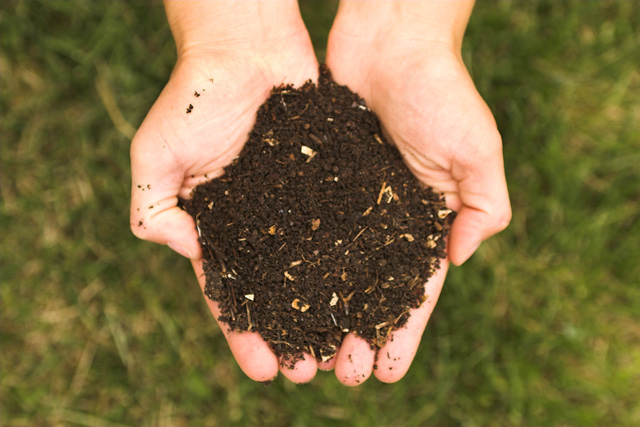
Last week: Ezra, Bobby and Albert chopping up the greens compost from our berm to add to the compost bin in layers with brown ingredients to speed up the decomposition process:

This weeks farm assignment:
On your blog please post:
Part I: Your observations and general feeling about the work you did at the farm.
Part II: We will all complete science experiments in class, though if you need it for your portfolio you will need to write a 3 page background paper to go along with it.
Research Question: What are you trying to figure out?
Hypothesis: What do you think will be the result of your experiment based on background research?
Independent Variable: What is the thing that you are testing or comparing?
Independent Variable: What will react to the test/comparison?
Constants: What will you make sure to keep the same in your test/comparison to really see if the independent variable you changed makes a difference?
Procedure:
Part III:
A list of the crops that you are growing in your berm and an approximate harvest date: This will be useful for planning our sales.
Tuesday, May 1, 2012
New Garden, Art and Economics class
I'm excited that this spring Jane and I have teamed up again. This cycle students will spend Tuesdays at the farm and Thursdays at school planning our new business.
It has only been a week and we have made so much progress.
Each student will keep a blog that will record their experience at the farm and in class. This will serve as the final project for the class.
To make a blog, you can use either blogger or wordpress.
http://www.blogger.com
http://wordpress.org
Follow the easy directions which include deciding on a title and URL. When you are done, please send Jane and Naima the URL address:
naima@cityas.org Jane@cityas.org
 For this week students should post two entries:
Art and Economics:
Introduce yourself and your department. Why did you choose your department? What are your responsibilities? What is the name of the company? logo? Mission Statement? What are the company values?What products are you planning to sell? How did the group make decisions?
Urban Farming:
How was your morning? Post 2 photos.
Update on your berm: What seeds are growing? What was harvested? What companions do you have or plan to have? (list 3). What plants/seeds do you need? Is soil alive? Why or why not? How can we manage our soil? What were the nutrient test results for your berm?

Friday, November 4, 2011
Read this if you want info on the compost assignment and need data!

Hi Everyone,
Well, we are busy gathering and interpreting our data. At the moment we have Brandon going down to the farm to count carrot seeds and Brocolli leaves, Tiara going tomorrow to count the brocolli leaves in her berm and Bridget going tomorrow to count Bok Choy leaves and all of the brocolli leaves (just to have as much data as possible). Please post on your blogs, so all of the students can share!
Here are the individual assignments for the compost book: You are responsible for one piece of your section (previously decided by your group).
Part 1: data, history, impacts
Part II: Biology, chemistry and physics
Part III: How it is used, studies on effectiveness and examples of innovative ways to compost in large-scale project.
Remember you are being graded according to:
Support from Reading/Research: "Demonstrates effective use of text support to answer prompt."
Controlling Idea: "Controlling idea that states the purpose and/or addresses the task's question."
The Effects of Trash
What afect does our production of garbage have? After looking at the graphs, videos, websites, articles, etc. write a brief explantion that examines how much waste is produced. what types of waster are there and where does New York city garbage go? Explain the effects of waste on the environment, health and resources of the planet. What impilcations can you draw? Support your discussion with evidence from your research (include the links within your essay)
How Does Decomposition Happen?
What makes compost happen? After reviewing the sources that your group has accumlated, write and essay that explains the deomposition process. Be sure to address the effects that Carbon, Nitrogen, Water and Air have on the biological, chemical and physical properites of the process. Support your description with evidence from your observations and from your research (include links).
Benefit of Compost:
What are the many benefits of creating and using compost? After analyzing the data, write a chapter for the book that showcases the benefits of composting on various aspects of the environment. Support your discussion with evidence from your research(include the links within your essay).
Thursday, October 27, 2011
What else is due?
In addistion to the other assignments listed on the previous post we now have a couple of new things due:
1. Description of pH experiment
2. Description of field trip to BKFarmyards to learn about hoop houses.
What are they? What are the pros and cons of them? Can CAS have one? Would you build one?
3. Final reflection: What did you like about the class? What are you still interested to learn about or be involved in? What do you recommend be different for the next class?
4. Your part of the chapter of the Garbage to Gold (Trash/compost) book.

Monday, October 17, 2011
The Compost Book
Our garbage affects our health and the environment. Unfortunately, there is no safe and easy place to put all of our waste indefinitely. We can, however, decrease our trash flow by separating and composting the organic waste.
Your job is to create a compelling book/resource guide that describes the problem, how decomposition works and the benefits of using compost.
Each student will:
1. Choose one area from the three sections described above and find at least 5 sources of information. These sources should include a variety of information, graphics, data, etc.
2. Meet as a group to identify which sources (should be 5 from each person) should be included.
3. Write your section of the guide using your sources as reference material. Each student will be responsible for a part of the section.
The problem with our trash: Each student pick one area:
a. history
b. data
c. impacts
How decomposition works:
a. The biology
b. The chemistry
c. The physics
The benefits of compost:
a. How it is used
b. Studies on effectiveness
c. Examples of innovative ways to compost in large-scale areas.
4. Each section should have at least 2 visuals (graph, table, picture, etc.), 1 video, 1 podcast and 4 written articles.
Monday, October 3, 2011
New Blogs Need Updating
Hi,
Today I read through the students' blog and they are very good. They all seem to need updating and more detailed information though:
At this point you should have:
1. First impressions of the farm.
2. Map of the farm
3. Description of companion planting and what crops you have chosen to plant based on companion planting.
4. Daily observations of the berm and the work that you do: Planting, thinning, dead-heading, weeding as well as observations of the plants: germination, harvesting and general health.
5. Soil and air temperature daily as well as soil moisture.
6. Description of our soil: N:P:K as well as pH and soil texture. Describe the process of getting the results.
7. Experiment Description for raising nitrogen: In Detail!
8. Research for lowering the pH of the soil organically.
Lots of Pictures!!
This is a picture of the roots of the cover crops improving the health of the soil by increasing organic matter and preventing erosion.
Today I read through the students' blog and they are very good. They all seem to need updating and more detailed information though:
At this point you should have:
1. First impressions of the farm.
2. Map of the farm
3. Description of companion planting and what crops you have chosen to plant based on companion planting.
4. Daily observations of the berm and the work that you do: Planting, thinning, dead-heading, weeding as well as observations of the plants: germination, harvesting and general health.
5. Soil and air temperature daily as well as soil moisture.
6. Description of our soil: N:P:K as well as pH and soil texture. Describe the process of getting the results.
7. Experiment Description for raising nitrogen: In Detail!
8. Research for lowering the pH of the soil organically.
Lots of Pictures!!

This is a picture of the roots of the cover crops improving the health of the soil by increasing organic matter and preventing erosion.
Monday, September 19, 2011
new Class Blogs
Here are the new crops of Blogs!
Titianna: http://titiannafisher.blogspot.com/
Tiara: http://www.tiara-thomas.blogspot.com/
Bridget: http://infiniteonature.blogspot.com/
Bobby: http://bobbysiafakas.wordpress.com
Mike: http://mikearcosfarm.blogspot.com/
Louis: http://city-asfarm.blogspot.com/
Aja: http://ajagrantsfarm.blogspot.com/
Hersh: http://hds-inquiry.blogspot.com/2011/09/hershs-first-farm-impression.html
Kendrick: http://farmingwithken.blogspot.com/
Rukiya: http://rukiyadaurbanfarmer.blogspot.com/
Tianna: http://yamuddda.blogspot.com/

Friday, July 22, 2011
Wow! Hot, Hot, Hot and Harvesting!
I went to the farm this morning and it was amazing!
Everything is growing robustly. Really! There is even a 5 inch watermelon developing. So much basil, the largest tomatoes I've ever seen, lots of blooming flowers attracting the good bugs, everything!
I thought I'd go for an hour and ended up staying for hours..It go so hot though that I almost passed out biking home. Luckily, I could cut up the cucumber, mix it with aloe vera and use it as a cooling face mask.
Anyway,
Here is a pic of the harvest from today:
Eight little carrots
.5lb of pineapple sage (I'm making tea out of it). It is so large it needs to be harvested. Please come and harvest some).
1 lb of basil
4 cucumbers
14 Nardello peppers


Thursday, June 16, 2011
Bees and Pix
Hi,
Here is a picture of our beautiful cilantro and the nasturtiums with sugar snap peas.

Also there are two bee demonstrations happening: tonight (thursday at 6pm) and tomorrow morning (Friday at 10am).
Here is a great youtub of the bee waggle:
http://www.youtube.com/watch?v=-7ijI-g4jHg
Lastly...go see the movie, Queen of the Sun tonight at Cinema Village. It got great reviews and its closing tonight...all about bees, GMO's pollination, seed saving, importance of people planting in their communities, etc.
Here is a picture of our beautiful cilantro and the nasturtiums with sugar snap peas.


Also there are two bee demonstrations happening: tonight (thursday at 6pm) and tomorrow morning (Friday at 10am).
Here is a great youtub of the bee waggle:
http://www.youtube.com/watch?v=-7ijI-g4jHg
Lastly...go see the movie, Queen of the Sun tonight at Cinema Village. It got great reviews and its closing tonight...all about bees, GMO's pollination, seed saving, importance of people planting in their communities, etc.
Tuesday, June 14, 2011
Times at the farm, nutrient test results, recipe for quinoa salad and bee talk
If anyone is interested in making up time or just being at the farm.
I can be there the following times. Please email/text me that you are coming:
Friday (6/17) afternoon:
1:30 (Bee talk at the hive...very exciting!)
Monday (6/20)
1:30
Wednesday (6/22)
1:30
Alissa and Adrian's test results (thanks to Massiel)
Phosphorus: abundant
Potassium: No precipitate (this is interesting since I don't know if this was the fertilized or unfertilized, I look forward to reading about it on your blogs!0.
Recipe for Quinoa salad, this isn't exactly the one I had today, but similar:
Quinoa Salad with Spinach, Raisins, and Walnuts
1 T olive oil
2 T minced red onion
1 garlic clove, minced
1 c quinoa, rinsed (rinsing is to remove the bitterness from the seeds)
1 ½ T golden raisins
1 ½ T dried currants
1 2/3 c water
1 c frozen chopped spinach, thawed
Zest and juice of 1 lemon
¼ c toasted chopped walnuts
2 T chopped parsley
Salt and pepper to taste
1-2 T good quality extra virgin olive oil for drizzling
3 oz feta or goat cheese
In a medium saucepan, heat the olive oil to medium heat. Add the onion and garlic and sauté for 2-3 minutes or until soft. Add the quinoa and continue to sauté for another minute or so. Add the raisins, currants and water and bring to a boil. Reduce to a simmer, cover, and allow to cook until water is nearly absorbed, about 10 minutes. Stir in spinach and cover again and let cook another 5 minutes. Remove from heat and allow to cool for a few minutes. Stir in lemon zest, lemon juice, walnuts, and parsley. Season generously to taste. Drizzle olive oil over and stir in. Serve chilled or at room temperature, topped with a bit of feta.
http://tastyeatsathome.wordpress.com/2010/01/23/quinoa-salad-with-spinach-raisins-and-walnuts/

Monday, June 13, 2011
Homework on Seeds:

To make it digitally easier, I've posted this handout on-line. Please read pages 69-74 and write a short essay that summarizes the reading that includes three questions.
http://www.oaec.org/sites/default/files/A-Handful-of-Seeds_0.pdf
Friday, June 10, 2011
Love the bees! And the Radishes!
Hi,
We harvested five radishes six

heads of lettuce, the lolla rossa and buttercrunch. We observed the bees, weeded and drew. All in all, very pleasant! We were all impressed with the work of the bees. Now that we know each bee will make about 1 teaspoon of honey in HER lifetime and that she has to make about 10 one-hour flights into the field each day visiting up to 10,000 flowers just to make that small amount we will savor every drop of honey we eat from now on!
We harvested five radishes six


heads of lettuce, the lolla rossa and buttercrunch. We observed the bees, weeded and drew. All in all, very pleasant! We were all impressed with the work of the bees. Now that we know each bee will make about 1 teaspoon of honey in HER lifetime and that she has to make about 10 one-hour flights into the field each day visiting up to 10,000 flowers just to make that small amount we will savor every drop of honey we eat from now on!
Wednesday, June 8, 2011
This is a great clip from Microcosmos showing the ants/aphid relationship and a ladybug:
http://www.youtube.com/watch?v=ut90wbLRqac
Here is another clip from the BBC:
http://www.youtube.com/watch?v=43id_NRajDo&NR=1
I really recommend you watch the whole Microcosmos movie and will grant you two hours of make up time if you do!

http://www.youtube.com/watch?v=ut90wbLRqac
Here is another clip from the BBC:
http://www.youtube.com/watch?v=43id_NRajDo&NR=1
I really recommend you watch the whole Microcosmos movie and will grant you two hours of make up time if you do!

Tuesday, June 7, 2011
Making up time
I know we discussed it today in class, but just in case here are your opportunities for making up time. Please remember to post a journal and picture on your blog for every time you make up.
The Farm:
Any afternoon, Thursday(6/9), June 11th and 12th. Also, during Regents Week, we can discuss next Tuesday 6/14.
Washington Square Park: Water the woollies!
Any appropriate events highlighted on the Food Systems NYC website: Check it out as there are cool and interesting things taking place!
http://www.foodsystemsnyc.org/events
Growing season
It is so surprising how much things have grown since Tuesday! More tomatoes, lettuce, basil, everything is taking off. We noticed the Oregano needs a little help so we will add more dried blood next Tuesday. It seemed to have an amazing effect on the tomatoes!
We also did a lot of work on the compost. We turned and turned. We took stuff out and cut it up and mixed it with brown leaves and now it should be ready in the near future.
We also watered our three sisters garden. Everything had sprouted and was looking really good.
Here are the varieties we planted last Tuesday:


Well, here are some pictures...I'll take more next Tuesday which is our last day :(
Also, we'll take some videos!
Thursday, June 2, 2011


Seeds that we Planted:
Veggies:
Okra
Summer Squash
Water Cress
Lettuce “Lolla Rossa”
Heirloom Cauliflower
Sugar snap peas
Velencia tomato
Arugula
Kentucky wonder bean, Hutterite bean
New mex joe parker pepper
Nardello pepper
Beet
Spinach
Batavian endive
Fruit:
Green rocky ford melon
Herbs:
Cilantro/coriander
Parsley
Sweet marjoram
Chives
Basil lime
Thai Basil
Dill
Flowers:
Nasturtium
Hollyhock
Coleus
Friday, May 27, 2011
Little Berm: Big Harvest!
Today we harvested 4.2 lbs of mesculun, 1.4 lbs of spinach and one strange beet from the berm. Students brought everything home and I hope they enjoy it while its fresh!


Here are some pictures of the happy farmers:


We also took some notes on our radish experiment that hopes to test whether the PlanTone is effective. We dug up two little one today for a baseline comparison. The one on the left is the control.

Subscribe to:
Posts (Atom)
